
The FDA Just Approved a Peptide for Mitochondrial Disease. That's Not Even the Interesting Part.
Posted by Jason Phelps on Jul 15th 2026
What SS-31 does inside your cells — and why it may have implications for the most common chronic diseases on the planet.
When the FDA approves a treatment for a rare genetic disorder affecting one in a million people, it doesn't usually make headlines outside of a small research community. But the September 2025 approval of SS-31 for Barth syndrome is different. Not because of what it does for that rare disease — but because of what it reveals about a mechanism that sits underneath almost every major chronic condition most people will actually face.
Heart disease. Diabetes. Alzheimer's. Chronic fatigue. Metabolic dysfunction. The common thread running through all of them, increasingly, is mitochondrial dysfunction. And SS-31 is the first peptide to achieve FDA approval by directly targeting the mitochondria.
That changes the conversation.
What Are Mitochondria Actually Doing?
Most people know mitochondria as "the powerhouse of the cell" — a middle school biology fact that doesn't quite capture what's at stake when they stop working properly.
Here's a more useful way to think about it: mitochondria are the cellular infrastructure that converts food into usable energy. Every process in your body — muscle contraction, hormone production, immune function, brain activity, tissue repair — runs on ATP, the energy currency mitochondria produce. When mitochondrial output drops, everything downstream suffers. Not dramatically at first. Gradually. Inefficiently. In the way that looks like aging, fatigue, metabolic slowdown, and disease risk accumulating over decades.
What determines how efficiently a mitochondrion produces energy isn't just how many you have. It's the structural integrity of the inner mitochondrial membrane — specifically, whether it's folded correctly and whether the protein complexes along that membrane are properly organized and stable.
This is where a lipid molecule called cardiolipin becomes critical.
Cardiolipin: The Structural Backbone of Energy Production
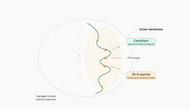
Inside every mitochondrion, the inner membrane is folded into intricate structures called cristae. These folds dramatically increase the surface area available for the electron transport chain — the series of protein complexes that produce ATP. Cardiolipin is the lipid that maintains the curvature of those folds and anchors the electron transport chain complexes in place.
When cardiolipin is intact and functioning, the mitochondria runs efficiently. Energy production is optimized. The cell does what it's supposed to do.
When cardiolipin is damaged — by oxidative stress, aging, metabolic inflammation, or genetic mutation — the inner membrane loses its structural integrity. The protein complexes involved in energy production destabilize. Efficiency drops. Reactive oxygen species (free radicals) increase. The cell shifts into a lower-energy, higher-stress state.
This isn't a rare edge case. Cardiolipin damage accumulates with age and is consistently observed in the cells of people with heart disease, type 2 diabetes, neurodegenerative disease, and skeletal muscle dysfunction. It's a common pathway in conditions that, on the surface, look completely unrelated.
Enter SS-31: A Peptide That Goes Where Nothing Else Can
SS-31 is a small tetrapeptide — just four amino acids — with an unusual property: it selectively localizes to the inner mitochondrial membrane. Most compounds can't get there. The mitochondria has two membranes, and the inner membrane is guarded by steep electrochemical gradients that prevent most molecules from penetrating it. SS-31 is specifically designed to cross those barriers and concentrate exactly where it's needed.
Once there, SS-31 binds directly to cardiolipin. By doing so, it stabilizes the structural integrity of the inner membrane, helps recruit and organize the protein complexes that drive energy production, and reduces the oxidative stress that would otherwise continue damaging the membrane.
The downstream effect is mitochondrial efficiency restoration — not by adding new mitochondria or bypassing the damage, but by repairing the environment in which energy production happens.
Research has mapped SS-31's interactions across a wide network of mitochondrial processes: ATP synthesis pathways, fatty acid oxidation, Krebs cycle enzymes, and the electron transport chain complexes themselves. It's not a single-target intervention. It's a structural stabilizer that touches almost every major energy-producing process in the cell because they all depend on the same underlying membrane architecture it's restoring.
The FDA Approval: Barth Syndrome as Proof of Concept
Barth syndrome is a rare X-linked genetic disorder — affecting roughly one in a million individuals — caused by a mutation in the gene responsible for cardiolipin synthesis. Without functional cardiolipin, mitochondrial structure collapses. The result is severe cardiomyopathy, skeletal muscle weakness, profound fatigue, and significantly shortened life expectancy. Until the SS-31 approval, there was no approved treatment.
In a randomized, double-blind, placebo-controlled trial with a 168-week open-label extension, SS-31 produced statistically significant improvements across multiple functional measures: walking distance (6-minute walk test), fatigue scores, muscle strength, balance, and functional capacity. These weren't marginal improvements in a single endpoint — they were consistent gains across the full picture of how this disease limits life.
The significance for medicine extends well beyond Barth syndrome. The approval validates a proof of concept: that directly targeting cardiolipin at the inner mitochondrial membrane with a peptide is both safe and clinically effective. Barth syndrome is essentially a pure model of cardiolipin dysfunction. If repairing that dysfunction with SS-31 produces measurable improvements in the most severe, genetically driven version of mitochondrial failure, the question becomes obvious:
What happens when you apply that same mechanism to the far more common, acquired forms of mitochondrial dysfunction that underlie everyday chronic disease?
The Bigger Picture: Mitochondrial Dysfunction Is Everywhere
Mitochondrial dysfunction isn't a rare disease. It's a feature of aging and a consistent finding across the most prevalent chronic conditions in modern medicine.
Heart disease: Cardiomyocytes — heart muscle cells — are among the most energy-demanding cells in the body. They're also among the most sensitive to mitochondrial efficiency loss. Cardiolipin damage in cardiac tissue is well-documented in heart failure and ischemic disease. Energy production in the heart muscle declines. Contractile function suffers.
Type 2 diabetes and insulin resistance: Skeletal muscle is the primary site of glucose disposal, and skeletal muscle mitochondrial dysfunction is one of the earliest detectable features of insulin resistance — preceding the blood sugar abnormalities that eventually lead to a diabetes diagnosis. Impaired mitochondrial ATP production disrupts the cellular signaling that makes muscles responsive to insulin.
Alzheimer's and neurodegenerative disease: The brain consumes roughly 20% of the body's total energy while representing only 2% of body weight. Neurons are acutely sensitive to mitochondrial insufficiency. Mitochondrial dysfunction and cardiolipin abnormalities are consistently observed in Alzheimer's brain tissue. The connection to what some researchers now call "Type 3 diabetes" — brain insulin resistance — likely runs through this same mitochondrial pathway.
Fatigue and age-related decline: The gradual energy decline most people attribute to "just getting older" tracks closely with age-related mitochondrial inefficiency. Pulsatile GH drops. Cardiolipin oxidizes. Cristae flatten. ATP output falls. The cells are still there. They're just running on less.
The implication is that a peptide capable of restoring cardiolipin integrity and mitochondrial efficiency isn't just relevant to a one-in-a-million genetic disease. It may be relevant to the chronic disease picture that affects most people in the modern world.
What This Means for Peptide Therapy
The SS-31 approval is also significant for how it frames the broader conversation around peptide medicine.
For years, peptides used in integrative and functional medicine contexts have operated in a regulatory gray zone — available through compounding pharmacies, used off-label, and often dismissed by conventional medicine as fringe or unproven. The SS-31 story complicates that narrative in an important way: the mechanism being validated by the FDA is the same class of targeted, cell-specific intervention that characterizes the broader peptide space.
Peptides work because they're precise. They're designed to go to specific locations, interact with specific targets, and produce specific biological effects with far narrower action profiles than traditional small-molecule drugs. SS-31's ability to localize exclusively to the inner mitochondrial membrane — and produce clinically meaningful outcomes there — is exactly the kind of mechanism-driven precision that distinguishes therapeutic peptides from blunt pharmacological tools.
That said, it's worth being honest about what the clinical evidence base does and doesn't show. SS-31's FDA approval covers a specific indication in a well-characterized genetic disease with a clear mechanistic target. The extension of that logic to broader chronic disease applications — heart failure, metabolic syndrome, cognitive decline — is scientifically compelling and actively being studied, but is not yet supported by the same quality of outcome data. Anyone exploring SS-31 in a clinical context needs monitoring, honest conversation with their provider, and realistic expectations about where mechanism ends and proven outcome begins.
The Bottom Line
A peptide just received FDA approval by directly targeting the structural foundation of cellular energy production. That's not a small thing.
Mitochondrial dysfunction sits underneath heart disease, diabetes, neurodegeneration, and metabolic decline. Cardiolipin damage is a common pathway in all of them. SS-31 — a four-amino-acid peptide — has now demonstrated in a controlled clinical trial that you can go directly to the source, stabilize that pathway, and produce real, measurable improvements in how patients function and feel.
The Barth syndrome approval is proof of concept. The larger question — what this means for the chronic diseases affecting hundreds of millions of people — is the conversation the research community is now actively having.
At TWC, we follow the science closely. Because the gap between rare disease research and everyday clinical application is often smaller than it looks — and the mitochondria may be the most important target in medicine that most people have never heard of.
Results vary. Peptide therapies are available through supervised clinical protocols at TWC Peptides. This content is educational and does not constitute medical advice. Consult with a qualified clinician to determine if these therapies are appropriate for your individual health profile.